Build a team that owns their results.
Krystal Weaver helps small business leaders get the performance they hired for, so the work gets done right without you standing in the middle.
Find the number one thing holding your team back. Takes four minutes.
You hired a team to help you grow the business.
Instead you got more questions, more problems, and more of your day spent answering both. Less energy at the end of it, and no time left to grow anything. And the more people you hire, the harder it gets.
It doesn't have to be that way.
- ✓A team that performs whether you are standing there or not.
- ✓The hard conversation over in ten minutes.
- ✓The people problems handled by your managers, not routed to you.
- ✓Decisions made once, with the standard doing the enforcing.
- ✓Hiring on facts instead of your gut.
- ✓A week off, and nothing falls apart while you are gone.
That team is buildable. Not hired, not lucked into, not waited for. Built, with a system that holds when you are not in the room.
It is not your people. It is the gap between what you said and what they heard.
I have sat on both sides of that desk for 20 years. The owner and the team describe the same week completely differently, and both are telling the truth. That gap is where your time and your margin go.
"I ask for one thing and get something else."
So you hover, or you do it yourself, because that is faster than explaining it a third time.
"Nobody wants to work anymore."
Gallup research puts at least 75% of the reasons people quit inside the manager's control. The labor market is not the variable you can change. This is.
"I'm the only one who can fix things."
When nobody has defined what the team is supposed to produce, everything routes back to the one person who knows. You.
You can't make your team care as much as you do. You can make them perform.
Most owners think they have been clear. They gave a task list. A task list tells someone what to be busy with. It never tells them what the team is supposed to produce, or how they will know they got there. Define the result, hold one standard for everyone, and most of what you call a people problem stops happening.
What changes in 90 days
Same team. Same building. Different week.
Find the number one thing holding your team back.
Start by telling me what you want to be true 90 days from now. Then answer twelve questions and I will send you your result and where to start.

I built the system I wish every owner already had.
I spent 20 years in employee relations. I sat in the room where the real decisions got made, and I sat with the employee afterward who had no idea it was coming.
What I learned in those two conversations is the struggle most small businesses are living in. The manager and the employee were almost never describing the same conversation. Not because anyone was lying. Because defining winning is more than a task list.
As an operating executive I saw what actually holds a team together when a company grows fast. I helped scale one from 100 people to more than 700, and I worked inside others growing through hiring and acquisitions. What I built since then came out of watching what worked and what didn't.
Now I install that in small businesses, so owners stop being the only person in the building who can get the result.
A man came to me in tears.
His manager had fired him that morning and never gave him a reason. When I asked the manager why, he said, "I can fire people for whatever I want."
Here is what happened. The manager came in that morning in a bad mood, saw the employee walking in, assumed he was late, and fired him on the spot. The employee had been outside prepping his truck and came in to grab paperwork. Not one question got asked before a man lost his livelihood.
That manager had never been trained, and the company had no system for any of it. So he did what people do with no standard to fall back on. He reacted.
That is what this work stops.
No one should ever be surprised they are being fired.
Three ways to work together
Define the Win Intensive
We get you and your managers in a room, virtual or in person, and build it together. We pick your three most important roles and define what winning looks like in each one, on one page. Your managers help build it, so they own it.
- Three key roles defined, start to finish
- Your managers in the room, building it with you
- You leave knowing how to hire against it
- And how to hold people to it without a fight
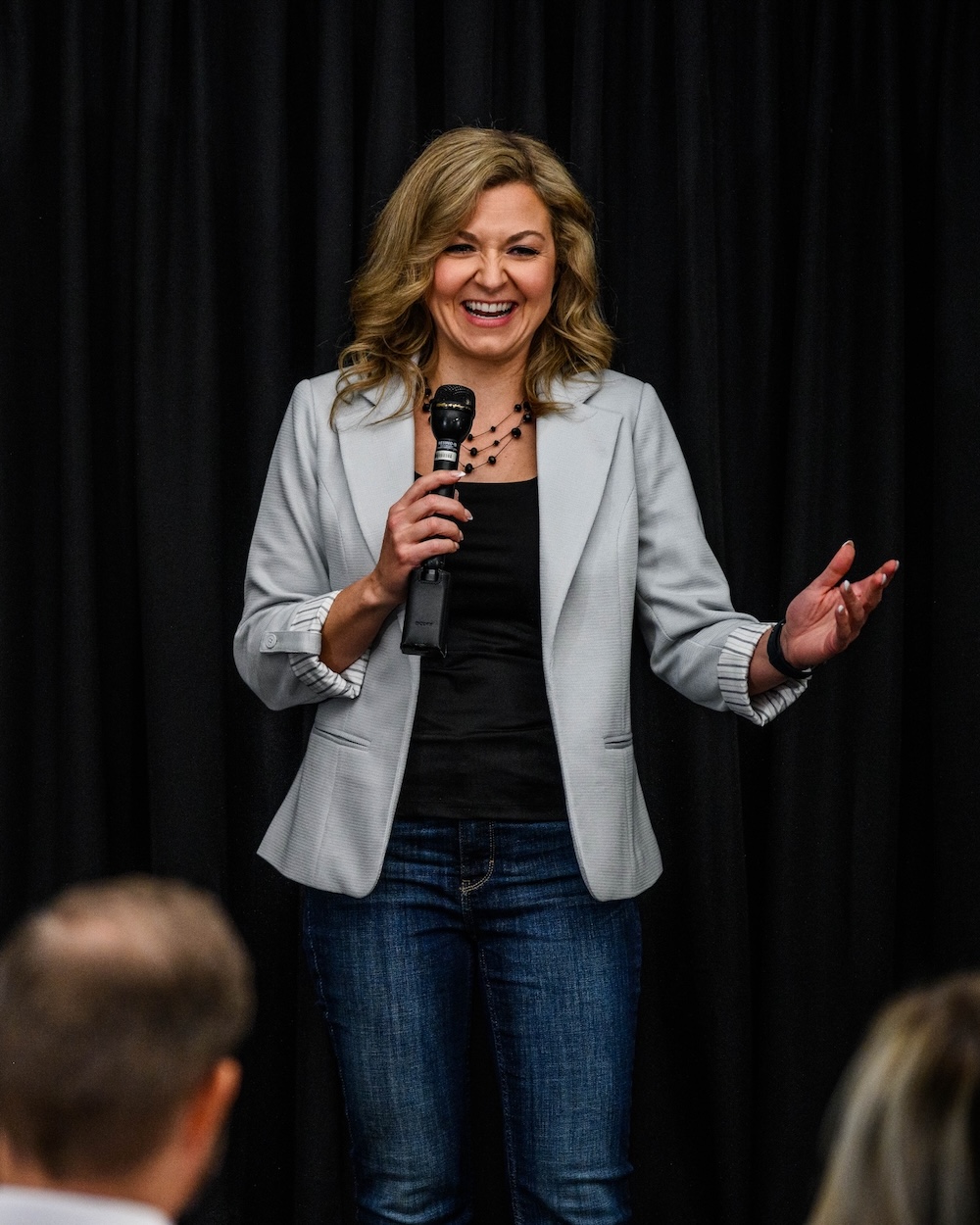
Invite Krystal to Speak
A room full of leaders who are tired of hearing that nobody wants to work anymore. They leave with something they can use Monday.
- No Excuses. Just Results: Build a Team That Owns the Work So You Can Own Your Time
- The C.L.E.A.R. Framework: The Hard Conversation, Done in 10 Minutes
- Hire for Talents, Train for Skills
- Silence Is Acceptance: Why Your Best People Are Begging for Accountability
The Right Results Install
The 90-day build that raises your team's standards, ends the repeat conversations, and lets you grow your business instead of refereeing.
- Fewer hours of your week spent on people problems
- Performance issues resolved in days instead of quarters
- Every seat defined, so hiring is a decision and not a gamble
- One standard applied to everyone, documented every time
The book is coming.
Twenty years of standing between what the owner said and what the team heard, written down. Clarity, communication, accountability. The three moves that turn a group of people who show up into a team that owns the result.
Find out what is really slowing your team down.
Twelve questions about your team. Four minutes. You get four scores, one for each step, and what to do about the weakest one.